Port-a-Cath Device Flow Analysis
Laminar Flow Simulation for Medical Device Optimization
Velocity (m/s): 0 → 1.5
Velocity streamlines and pressure contours highlight flow behavior around the Port-a-Cath device
Abstract
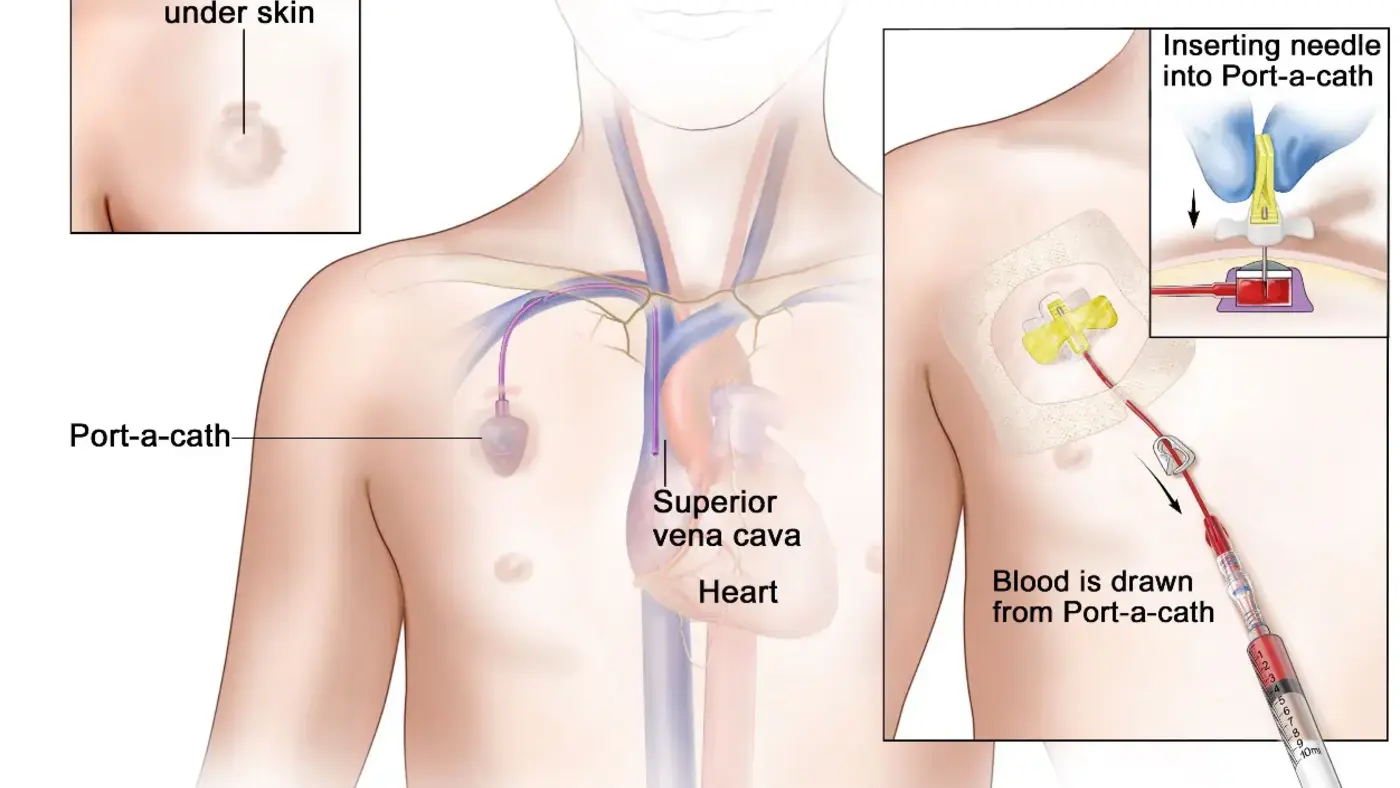
This study investigates the fluid dynamics of a Port-a-Cath device implanted in the vena cava. The simulation focuses on laminar flow behavior, pressure distribution, and potential areas of flow stagnation to improve device design and patient outcomes.
The simulation revealed a stable laminar flow profile with localized recirculation zones near the catheter tip. Pressure drop across the Port-a-Cath was within acceptable clinical limits, and wall shear stress values were consistent with physiological conditions.
The Port-a-Cath design ensures minimal disruption to vena cava flow while maintaining clinically acceptable pressure drops. Localized recirculation zones were identified, which could inform future design improvements to enhance long-term clinical performance.
Metodologia
Numerical Approach
- ▸Governing equations: Navier-Stokes equations for incompressible laminar flow
- ▸Solver: Pressure-based segregated solver with SIMPLE algorithm
- ▸Mesh: Structured cartesian mesh geometry developed with blockMesh utility
- ▸Transport Model: Bird-Carreau for non-Newtonian blood behavior
- ▸Boundary conditions: Velocity inlet at the vena cava and zero-pressure outlet
Computational Domain
- ▸3D reconstruction of the vena cava geometry from medical imaging data
- ▸Port-a-Cath modeled as a cylindrical catheter with an infusion port
- ▸Refined mesh near the catheter tip to capture flow gradients
- ▸Domain extended upstream and downstream to minimize boundary effects
Risultati e Scoperte
The simulation demonstrated that the Port-a-Cath design ensures minimal disruption to vena cava flow while maintaining clinically acceptable pressure drops.
Key Findings
- 1Stable laminar flow profile with localized recirculation zones near catheter tip
- 2Pressure drop across Port-a-Cath within acceptable clinical limits
- 3Wall shear stress values consistent with physiological conditions
- 4Localized recirculation zones identified for future design improvements
Ready to Optimize Your System?
Let's discuss how CFD analysis can deliver measurable performance improvements for your engineering challenge.
Start a Conversation